As an Amazon Associate, we earn from qualifying purchases. Some links on this site are affiliate links at no extra cost to you. Our recommendations are based on thorough research and editorial judgment.

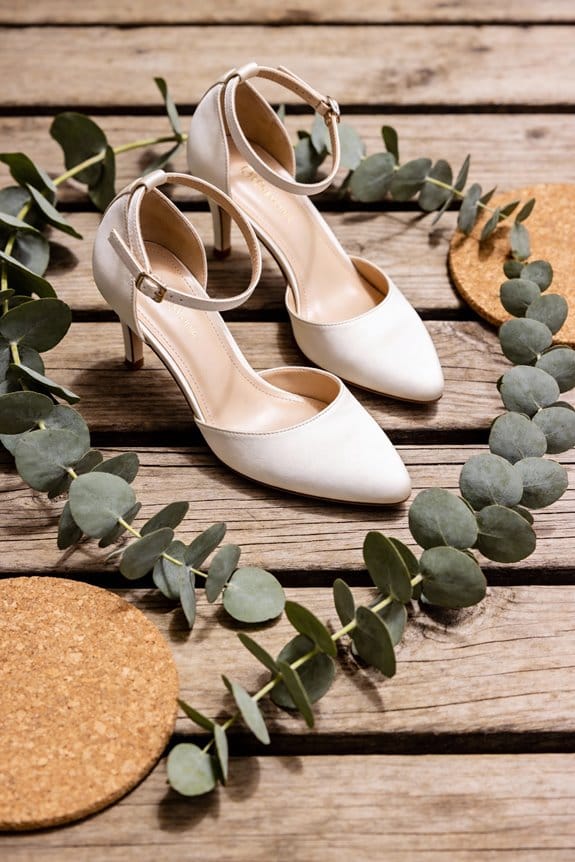
The Ultimate Guide to Breaking in Your Bridal Shoes Before the Ceremony

Breaking in bridal shoes two to three weeks before the ceremony softens leather and loosens tight spots like the heel and toe box, preventing blisters on the big day. Wearing shoes indoors on carpet and tile, gradually increasing time, helps them mold to feet comfortably. Thick socks gently stretch snug areas, while cushioned insoles add support. Testing shoes by walking and dancing guarantees stability and comfort, leaving brides truly blown away. More detailed tips follow for perfect prep.
Key Takeaways
- Start breaking in bridal shoes 2-3 weeks before the wedding by wearing them indoors for short, increasing intervals daily to soften materials.
- Wear thick socks during break-in to gently stretch tight areas and reduce discomfort on sensitive spots like heels and toes.
- Test shoes on varied surfaces such as carpet and tile to identify and address any stability or slipping issues.
- Add cushioned insoles for extra pressure relief and apply clear hairspray on soles to improve traction and prevent slipping.
- Confirm shoes fit snugly with room for toe movement, prioritize supportive heels or flats, and always have backup footwear ready.
Why Breaking in Wedding Shoes Is Essential

Although some brides underestimate the value of breaking in their wedding shoes, doing so is truly essential for avoiding blisters and discomfort on such an important day. Breaking in your wedding shoes, whether they are stilettos or cushioned bridal flats, helps reduce rubbing in sensitive areas like the heel and toe box, preventing painful blisters. Regularly wear heels or flats for at least 2-3 weeks prior, allowing the materials—leather, satin, or suede—to soften and conform to your foot shape. This careful preparation increases comfort by easing tight spots and improving your balance on varied surfaces. Ultimately, practicing in your shoes builds confidence and stability, ensuring you can move gracefully without distraction or worry, truly blown away by how a little effort can transform your long wedding day experience. Paying attention to adjustable straps when breaking in shoes can further enhance fit and prevent soreness throughout your celebration.
When to Start Breaking in Your Bridal Shoes

Since the materials used in bridal shoes—such as supple leather, delicate satin, or soft suede—often need time to adapt, starting the break-in process 2 to 3 weeks before the wedding is a smart move. It allows brides to wear their wedding shoes around the house for short periods daily, gradually increasing the time to avoid soreness and blisters. Wearing them around while doing simple tasks, like applying makeup or setting tables, helps the shoes mold naturally to the feet without intense discomfort. Avoid leaving it until the week of the wedding, as that rush rarely ends well. By starting breaking in early, any pressure points become apparent, allowing for adjustments or gentle stretching. Proper timing in breaking in bridal shoes makes for a truly comfy ceremony. Additionally, choosing shoes made from full-grain leather can facilitate easier break-in owing to their natural texture and breathability.
How to Select the Perfect Wedding Shoe Fit

How does one truly find the perfect fit for wedding shoes that will last all day and night? Start by ensuring the shoes fit snugly yet allow enough room for toes to wiggle freely, preventing blisters and discomfort. It’s wise to try on both shoes together since one foot may be slightly larger; a half-size up can accommodate expected swelling during a long day. Opt for supportive bridal styles like block heels or elegant flats, as they provide better balance and reduce foot fatigue compared to stilettos. Additionally, consider breathable materials that keep feet cool and the venue—outdoor settings may need shoes with better traction. Finding the right fit means the shoes are comfy from the first step, supportive throughout, and leave you truly blown away by their comfort. Selecting shoes with adjustable straps can enhance stability and comfort for extended wear.
Effective Techniques for Breaking in Shoes
Breaking in bridal shoes requires patience and a thoughtful approach to guarantee comfort on the big day. To effectively break in wedding shoes, it helps to start by wearing the shoes indoors for short sessions, gradually increasing the time spent walking around. A pair of comfy thick socks can be worn to gently stretch tighter spots without overstressing the material. Testing the shoes on various surfaces like carpet and tile reveals any uncomfortable areas or slipping risks. Many who’ve tried the best bridal shoes recommend adding cushioned insoles to reduce pressure on the balls of the feet, while applying clear hairspray to soles can improve traction. These steps combined make sure the shoes feel well-molded to the foot, providing better support and confidence when standing or walking.
Using Accessories to Enhance Shoe Comfort
A handful of essential accessories can truly transform the comfort level of bridal shoes during the longest day of standing and dancing. Cushioning insoles, made from gel or memory foam, reduce pressure on the balls of sore feet and soften impacts while walking around, especially in high heels with narrow toe boxes that often cause discomfort. Heel grips secure the shoe, eliminating slippage and minimizing blisters and foot fatigue. Additionally, anti-chafe balm applied to rubbing areas creates a protective barrier that’s easy to use and prevents irritating blisters. It’s wise to bring a backup pair of comfy flats or sneakers; swapping shoes during the reception offers much-needed relief. These combined accessories guarantee bridal shoes remain bearable and stylish, even after hours on hard floors. Incorporating memory foam insoles can further enhance cushioning and arch support, providing all-day comfort during the event.
Practicing Walking in Your Wedding Shoes
Slipping into wedding shoes well before the big day can make a remarkable difference in comfort and confidence. To truly break in bridal shoes, practice walking on diverse surfaces like plush carpet, slippery tile, and uneven outdoor paths, which helps mimic the wedding day’s variety. Starting with short sessions indoors, gradually extend walking duration to detect tight spots or soreness, ensuring shoes feel comfortable for hours. Moving about the house while doing chores or setting up the venue familiarizes feet with the shoe’s shape and heel height, boosting balance and stability. Running errands while wearing these shoes further tests their comfort over long periods, preventing unwelcome surprises. This deliberate, regular walking practice allows brides to feel poised and avoid trips during the ceremony, making the experience far more enjoyable. Paying attention to heel height options when selecting bridal shoes can further enhance comfort and overall experience.
How to Stretch Tight Wedding Shoes Safely
Several reliable methods exist for safely stretching tight wedding shoes before the big day, ensuring comfort without causing damage. One can break in the shoes by wearing thick socks and walking around the house, gently loosening the material. Using a blow-dryer on low heat for about 30 seconds, especially on snug areas, then slipping the shoes on immediately encourages them to mold safely to the foot’s shape. For more targeted stretch, a shoe stretcher works well, widening specific spots without harming delicate leather or fabric. Additionally, applying moleskin or blister patches on pressure points provides instant relief while breaking in. Always check shoe material compatibility before stretching; leather tolerates heat and manipulation better than others. These safe approaches help brides feel comfy and confident on their big day, and not limp away regretting tight shoes. It’s also important to consider the toe box roominess to avoid discomfort from pinching during extended wear.
Signs Your Shoes Are Ready for the Big Day
When wedding shoes are finally ready for the big day, the difference is immediately noticeable during extended wear tests lasting three to four hours on varied surfaces like plush carpet and slippery tile. New shoes that start breaking in correctly show softened leather or fabric, molded to the foot’s shape, which helps them stay comfortable throughout these periods of time. For the first wear, no pinching or tightness should appear, and the toe box should feel roomy, preventing blisters or sore spots. Walking confidently on slippery tile and plush carpet without wobbling or slipping confirms the shoe’s stability. Dancing and moving freely without discomfort is another clear sign indicating these shoes for the first occasion have been properly broken in and are now truly bridal-ready. Additionally, proper memory foam cushioning enhances shock absorption and comfort during these initial wear tests.
Backup Footwear Options for Your Wedding Day
A handful of backup footwear options can make a significant difference on the wedding day, especially after hours in heels that often cause sore feet or pinched toes. Having a stylish backup pair of bridal flats or cushioned sandals allows quick change from high heels to something comfy, preventing discomfort from ruining the celebration. Folding flats made of soft leather can easily fit in a bridal bag, providing relief when the toe box in heels feels tight. It’s wise to keep cushioned sandals nearby, as they reduce foot strain while dancing or standing long. Assigning the maid of honor to hold these shoes guarantees an effortless change. Overall, backup footwear enhances comfort and allows brides to truly enjoy every moment without wincing or limping afterward. Choosing shoes with non-slip rubber soles ensures safety even when switching to backup footwear during the event.
Frequently Asked Questions
How to Break in Shoes Before a Wedding?
Breaking in bridal shoes is like sculpting clay to fit the foot. Using sock techniques, testing bridal shoe materials, exploring heel alternatives, and applying insoles benefits create personalized comfort solutions that guarantee pain-free steps on the wedding day.
When Should You Start Breaking in Your Wedding Shoes?
Breaking in wedding shoes should start 2-3 weeks prior to the event. Shoe shopping tips include balancing comfort vs style, considering heel height impact and material considerations, while also exploring alternative footwear options for all-day wearability.
What Is the White Shoe Rule?
A bride’s white shoes, shimmering like fresh snow, embody bridal style and color symbolism, upholding wedding traditions and fashion etiquette. This white shoe rule guides shoe comfort and matching, blending classic purity with elegant ceremony aesthetics.
How to Break in Dress Shoes Quickly?
To break in dress shoes quickly, one should apply shoe stretching techniques like gentle heat and thick sock wearing strategies, follow leather care tips, use foot soreness remedies such as cushioned insoles, and heed shoe selection advice for comfort.


